A well-chosen pocket square can elevate a suit from ordinary to polished, but knowing which fold matches your event, fabric, and jacket pocket is where real style precision begins. This practical guide walks you through the most reliable techniques—from simple puffs to structured peaks—so you can make a confident decision in under a minute.
Understand the Fabric Before You Fold
Cotton and linen squares hold crisp edges and suit formal settings like weddings or business meetings. Silk drapes softly, making it ideal for the puff fold at cocktail events. Wool or cashmere adds texture for casual layering. The fold you choose should work with the material, not against it—forcing a sharp peak on flimsy silk will look limp rather than intentional.
The Core Folds: When to Use Each

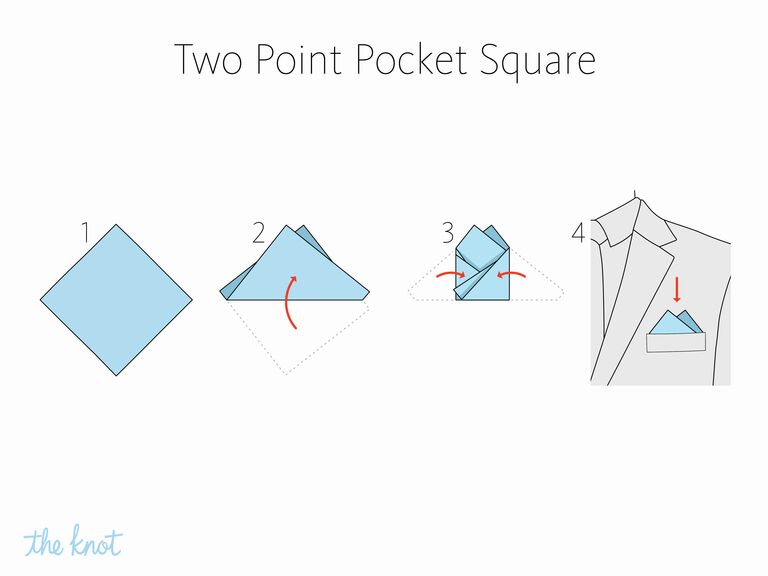
The Classic Fold (straight across once, then once more) is the safest choice for job interviews and formal dinners—clean lines, minimal fabric showing. The One-Point Fold creates a single triangle peak and works well with patterned squares where you want one focal point. The Two- and Three-Point Folds add visual complexity without looking overdone, making them strong candidates for semi-formal events like gallery openings.
The TV Fold produces a flat, horizontal line peeking from the pocket—ideal for navy or gray business suits. The Puff Fold suits silk squares at evening functions; simply pinch the center and drop it into the pocket, letting the fabric billow naturally.
Master the Three-Peak Technique
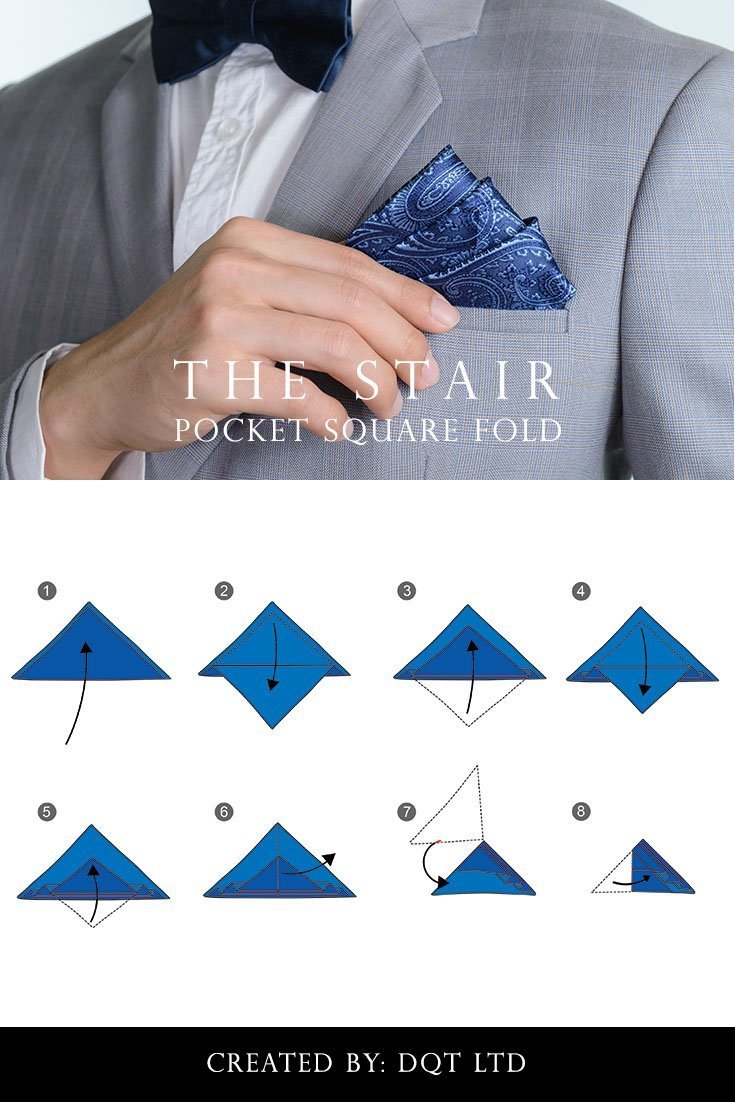
The Three-Peak fold delivers a tiered, architectural appearance that pairs exceptionally well with solid-colored squares in contrasting shades. To execute it: lay the square flat, fold it into an uneven triangle where the corners do not align, then fold again to create three staggered peaks. Tuck the base into your pocket and adjust each point so they cascade evenly. This fold demands practice—the payoff is a distinctive detail that stands out at black-tie dinners or celebratory events.
Matching Fold to Jacket Pocket Type
A slanted welt pocket suits diagonal and angled folds like the Two-Point or Crown Fold, because the lines mirror each other. Straight welt pockets pair better with horizontal folds—the TV Fold or Flat Fold—since they maintain symmetry. Patch pockets, common on blazers, tolerate casual styles like the Puff or basic straight fold without looking mismatched.
Quick Decision Framework
- Formal event, unknown dress code: One-Point or Classic Fold—versatile and universally safe.
- Business setting: TV Fold or Classic Fold for understated precision.
- Date night or cocktail hour: Puff Fold with a silk square for relaxed elegance.
- Wedding or gala: Three-Peak or Crown Fold for a statement that photographs well.
Final Tips for a Clean Finish
Iron cotton and linen squares before folding—wrinkles undermine even the best technique. Keep the top edge roughly half an inch below the pocket lip so the fold reads intentional, not accidental. Store folded squares flat in a drawer rather than hanging to preserve shape. With these steps, every pocket square placement becomes a deliberate choice rather than an afterthought.
How To Fold A Pocket Square: A Complete Guide
How to Fold a Pocket Square: A Complete Guide
How To Fold A Pocket Square Three Stairs – Artofit

How to fold a pocket square three stairs – Artofit
PocketSquare - A Small Accessory That Makes A Big Impact With A High

PocketSquare - A small accessory that makes a big impact with a high ...